Manufacturing operations depend on machines running reliably, consistently and efficiently. But when production teams cannot see what is happening across their equipment, even small operational issues can lead to unexpected downtime, missed production targets and higher operating costs.
A machine may be running below its expected speed, stopping repeatedly, consuming more energy than usual or remaining idle between production cycles. Without reliable machine-level data, these issues can be difficult to identify and investigate.
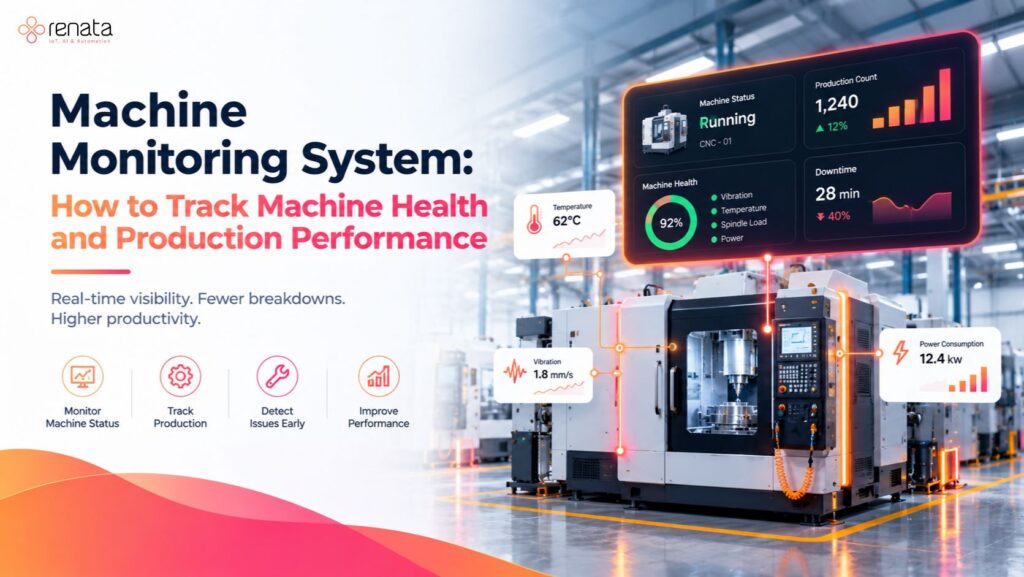
A machine monitoring system helps manufacturers gain visibility into equipment performance by collecting and presenting operational data from machines. Instead of relying entirely on manual inspections, operator updates or disconnected spreadsheets, teams can use real-time information to understand machine status, production activity and operating conditions.
With industrial IoT technologies, machine monitoring can bring data from multiple machines into a centralized dashboard, helping production, maintenance and operations teams make more informed decisions.
In this guide, we explain what a machine monitoring system is, how it works, which parameters manufacturers can track, and how to implement one effectively.
What Is a Machine Monitoring System?
A machine monitoring system is a technology solution that collects, processes and displays operational information from industrial machines and equipment.
It helps manufacturers understand whether machines are running, idle, stopped or operating under abnormal conditions. Depending on the equipment, sensors and system configuration, it can also track parameters such as temperature, vibration, pressure, current, energy consumption, operating hours and production counts.
A machine monitoring solution typically combines:
- Sensors and data sources: Collect information about machine conditions and operating activity.
- Connectivity: Transfers machine data through suitable industrial communication methods.
- Data processing: Organizes and processes incoming information.
- Monitoring dashboard: Displays machine status, trends, alerts and performance indicators.
- Reports and notifications: Help teams review performance and respond to relevant events.
The objective is straightforward: give manufacturers better visibility into how their machines are operating so they can identify issues, reduce information gaps and improve production decisions.
Why Do Manufacturers Need Machine Monitoring?
Many factories still depend on manual production reports, operator observations and periodic machine inspections. These methods can be useful, but they may not provide continuous visibility across an entire production floor.
For example, a machine might stop several times during a shift. If operators record only the total production quantity at the end of the shift, supervisors may not know how many interruptions occurred or how much production time was lost.
Similarly, equipment may continue running while experiencing unusual vibration or rising temperature. Without appropriate monitoring, maintenance teams may discover the issue only during an inspection or after equipment performance has deteriorated.
A machine monitoring system helps address these visibility gaps.
1. Limited visibility into machine status
Production managers need to know which machines are running, idle or stopped. Without centralized information, they may need to contact operators or walk across the production floor to understand the current situation.
Machine monitoring provides a consolidated view of equipment status.
2. Unplanned production interruptions
Unexpected machine stoppages can affect production schedules and delivery commitments. Monitoring operating conditions and machine events can help teams identify interruptions and investigate recurring problems.
3. Delayed maintenance response
When equipment abnormalities are not identified early, maintenance teams may have less time to plan inspections or corrective action. Relevant machine data can help them prioritize issues.
4. Difficulty measuring production performance
Production quantity alone does not explain how effectively a machine is being used. Teams also need information about operating time, idle time, downtime and cycle performance.
5. Disconnected operational data
When machine information is recorded in separate systems or spreadsheets, comparing performance across machines and shifts becomes difficult. A centralized monitoring platform can make this information easier to review.
How Does an Industrial Machine Monitoring System Work?
An industrial machine monitoring system follows a sequence of data collection, communication, processing and visualization.
Step 1: Collect machine data
Data can come from different sources depending on the equipment and monitoring requirements.
These may include:
- Industrial sensors
- PLCs and machine controllers
- CNC machines
- Electrical meters
- Existing automation systems
- Machine communication interfaces
For example, a vibration sensor can provide information about machine vibration, while a current sensor can help track electrical load.
Step 2: Transfer data through industrial connectivity
Collected information needs to reach the monitoring platform.
Connectivity options may include Ethernet, industrial protocols, gateways, Wi-Fi or other communication technologies, depending on the factory environment and equipment.
The appropriate method depends on machine compatibility, data requirements, network availability and operational constraints.
Step 3: Process and organize the information
The monitoring platform receives machine data and organizes it into useful information.
This may involve associating readings with specific machines, applying operating thresholds, calculating downtime or identifying changes in machine conditions.
Step 4: Display information on a dashboard
A centralized dashboard helps authorized users review machine information without manually collecting data from every production area.
Depending on the configured solution, users may view:
- Current machine status
- Running and idle time
- Downtime events
- Production counts
- Machine operating parameters
- Historical performance trends
- Alerts and notifications
Step 5: Use insights to improve operations
Monitoring becomes valuable when teams use the information to take action.
Production teams can investigate recurring stoppages, maintenance teams can review abnormal operating conditions, and managers can compare performance across machines or shifts.
Key Parameters to Monitor in Industrial Machines
The right monitoring parameters depend on the machine type, production process and operational objectives. Manufacturers should select measurements that help answer specific business or maintenance questions.
1. Machine running status
Machine status provides a basic view of equipment availability.
Common status categories include:
- Running
- Idle
- Stopped
- Fault
- Maintenance
This information helps production teams understand machine utilization and identify equipment that is not operating as expected.
2. Machine downtime
Downtime refers to the period when a machine is unavailable for its intended production activity.
Monitoring downtime can help manufacturers understand:
- How frequently machines stop
- How long interruptions last
- Which machines experience repeated stoppages
- Whether downtime patterns vary by shift
- Which issues require investigation
Where possible, downtime reasons should be captured consistently so teams can distinguish planned maintenance, changeovers, material shortages and equipment-related failures.
3. Temperature
Temperature monitoring helps track thermal conditions in motors, bearings, gearboxes, electrical panels and other equipment.
Unusual temperature changes may indicate a condition that requires investigation. However, temperature readings should always be interpreted in the context of equipment specifications, operating load and environmental conditions.
4. Vibration
Vibration monitoring can help identify changes in rotating equipment behavior.
Depending on the equipment and sensor configuration, vibration data may help maintenance teams investigate possible imbalance, misalignment, looseness or bearing-related issues.
A single vibration reading does not automatically confirm a machine fault. Trends, operating conditions and suitable diagnostic methods are important.
5. Energy consumption and electrical parameters
Monitoring electrical consumption can help manufacturers understand how machines use energy during different operating conditions.
Relevant measurements may include:
- Energy consumption
- Voltage
- Current
- Power
- Power factor
These readings can help identify unusual consumption patterns and support energy-efficiency investigations.
6. Production count and cycle time
Production monitoring helps teams understand how many units a machine produces and how long production cycles take.
Depending on machine connectivity, the system may capture production counts automatically or receive them from existing controllers and production systems.
Comparing actual cycle times with expected production rates can help identify performance gaps.
7. Pressure and flow
For machines that depend on hydraulic, pneumatic or fluid systems, pressure and flow measurements can provide useful operational information.
Examples include hydraulic systems, industrial compressors, pumps and process equipment.
8. Operating hours
Operating-hour tracking helps maintenance teams understand equipment usage.
It can support maintenance scheduling based on actual operating time rather than relying only on calendar-based intervals.
Machine Monitoring vs. Predictive Maintenance: What Is the Difference?
Machine monitoring and predictive maintenance are related, but they are not the same.
Machine monitoring focuses on collecting and presenting information about machine status, operating conditions and performance.
Predictive maintenance uses relevant equipment data and analytical methods to assess developing equipment problems and estimate when maintenance may be required.
Area | Machine Monitoring | Predictive Maintenance |
Main objective | Visibility into machine operation and performance | Anticipate potential equipment failures |
Typical data | Status, downtime, production, temperature, vibration, energy | Condition data, trends, diagnostic indicators and relevant operating history |
Main users | Production, operations and maintenance teams | Maintenance and reliability teams |
Typical outcome | Better operational visibility | Better-informed maintenance planning |
Relationship | Provides useful machine data | Can use monitoring data as an input |
Machine monitoring can be a foundation for a broader predictive maintenance strategy, but installing a monitoring dashboard alone does not automatically create predictive maintenance capability.
For manufacturers exploring this next step, see Renata IoT’s predictive maintenance solution.
Benefits of a Machine Monitoring System
A properly configured machine monitoring system can support improvements across production, maintenance and operational management.
1. Better machine visibility
Teams can view machine status and relevant operating information through a centralized platform. This reduces dependence on scattered updates and manual reporting.
2. Improved downtime tracking
Recording machine stoppages helps manufacturers understand where production time is being lost and investigate recurring interruptions.
3. More informed maintenance planning
Temperature, vibration, operating-hour and other relevant measurements can help maintenance teams identify conditions that deserve attention.
4. Improved production performance analysis
Machine-level data helps teams compare performance across equipment, production lines and shifts.
5. Data-driven operational decisions
Instead of relying entirely on assumptions, managers can use historical trends and machine information to support decisions about maintenance, scheduling and equipment utilization.
6. Reduced manual data collection
Automated data collection, where technically supported, can reduce repetitive manual recording and make operational information more consistent.
7. Better coordination between teams
A shared view of machine performance can help production and maintenance teams discuss issues using the same operational information.
8. Support for energy-efficiency initiatives
Machine-level energy information can help manufacturers investigate equipment that consumes more energy than expected or operates inefficiently.
Common Applications of Machine Monitoring Across Industries
Machine monitoring is relevant wherever equipment performance, availability and operating conditions affect production.
Automotive manufacturing
Automotive plants use machines such as CNC equipment, robotic systems, conveyors, presses and assembly-line equipment.
Monitoring can help production teams review machine status, cycle activity, downtime and equipment conditions across production processes.
Metal fabrication
Metal fabrication facilities often operate cutting, welding, bending, machining and forming equipment.
Machine monitoring can help teams track operating hours, production activity, interruptions and relevant machine parameters.
Food and beverage manufacturing
Production lines in food and beverage facilities depend on equipment such as mixers, conveyors, filling machines, packaging machines and processing systems.
Monitoring can support equipment visibility and help teams investigate interruptions that affect production flow.
Pharmaceutical manufacturing
Pharmaceutical production uses specialized equipment for mixing, processing, packaging and other controlled operations.
Machine monitoring can provide operational data that supports equipment oversight. Any regulated recordkeeping or validation requirements must be addressed separately through suitable systems and procedures.
Packaging and FMCG
Packaging facilities often operate multiple machines at high production speeds.
Monitoring machine status, cycle time, production counts and downtime can help teams understand line performance and identify recurring bottlenecks.
Heavy engineering and industrial equipment
Heavy engineering operations depend on large machines and equipment that may operate under demanding conditions.
Monitoring relevant parameters such as temperature, vibration, pressure and operating hours can support equipment oversight and maintenance investigations.
How to Implement a Machine Monitoring System in a Factory
Successful implementation starts with clear objectives rather than installing sensors everywhere.
The following steps can help manufacturers plan a practical machine monitoring project.
Step 1: Identify the machines to monitor
Start by listing critical machines and production assets.
Prioritize equipment based on factors such as:
- Production importance
- Frequency of downtime
- Maintenance history
- Equipment criticality
- Energy consumption
- Availability of machine data
A pilot involving a few important machines can help validate the approach before expanding across the facility.
Step 2: Define monitoring objectives
Decide what the system needs to achieve.
For example:
- Track machine running and idle status.
- Measure machine downtime.
- Monitor temperature and vibration.
- Track production counts.
- Review machine energy consumption.
- Compare performance across shifts.
Clear objectives help determine the sensors, data sources and dashboard requirements.
Step 3: Assess existing machine connectivity
Check whether machines already provide data through PLCs, controllers or communication interfaces.
For machines without suitable digital interfaces, additional sensors or data acquisition devices may be required.
The solution should account for machine age, compatibility, installation constraints and network conditions.
Step 4: Select suitable sensors and connectivity
Choose sensors and connectivity methods based on the parameters being monitored.
For example, vibration monitoring requires suitable vibration sensors, while machine energy tracking may require electrical measurement devices.
Sensor selection should consider measurement range, accuracy, installation location and the machine’s operating environment.
Step 5: Configure dashboards and alerts
Build dashboards around the information different teams actually need.
Production managers may prioritize running status, downtime and production counts. Maintenance teams may need equipment condition trends and operating-hour information.
Alerts should be configured around meaningful thresholds and events to avoid unnecessary notifications.
Step 6: Run a pilot and validate the data
Test the system on selected machines before scaling up.
During the pilot, verify:
- Whether machine status is captured correctly
- Whether downtime events are recorded consistently
- Whether sensor readings are reliable
- Whether dashboard information is understandable
- Whether alerts are useful
- Whether the system fits existing workflows
Step 7: Train users and expand gradually
Train operators, supervisors and maintenance personnel to interpret the dashboard and respond to relevant information.
Once the pilot is working reliably, expand the monitoring setup to additional machines and production areas.
Important KPIs to Track Through Machine Monitoring
A machine monitoring system can support several operational performance indicators. The most useful KPIs depend on the production process and how consistently machine events are recorded.
KPI | What It Measures | Why It Matters |
Machine availability | Percentage of planned time a machine is available for production | Helps assess equipment availability |
Downtime | Time lost due to machine stoppages | Identifies production interruptions |
MTBF | Mean time between failures | Helps understand reliability trends |
MTTR | Mean time to repair | Helps assess maintenance response and repair duration |
OEE | Overall Equipment Effectiveness | Combines availability, performance and quality |
Cycle time | Time required to complete a production cycle | Helps evaluate production speed |
Production count | Units produced during a defined period | Tracks output |
Energy consumption | Energy used by equipment | Supports energy analysis |
Understanding OEE
Overall Equipment Effectiveness (OEE) is commonly calculated using three components:
OEE = Availability × Performance × Quality
Where:
- Availability measures the proportion of planned production time that equipment is running.
- Performance compares actual production speed with the expected production speed.
- Quality measures the proportion of total output that meets quality requirements.
Machine monitoring can help collect information relevant to OEE calculations. However, accurate OEE reporting also requires reliable production targets, planned production time, downtime classification and quality data.
Common Challenges in Machine Monitoring Implementation
Machine monitoring can deliver useful operational visibility, but manufacturers should plan for practical implementation challenges.
Legacy machine compatibility
Older machines may not provide digital data or modern communication interfaces.
What to consider: Assess each machine individually and evaluate suitable sensors, gateways or data acquisition methods.
Inconsistent data quality
Incorrect sensor installation, communication interruptions or inconsistent machine-state definitions can affect reporting.
What to consider: Validate data during the pilot and establish consistent definitions for running, idle, stopped and fault conditions.
Too many alerts
Excessive notifications can make it difficult for users to identify important events.
What to consider: Configure alerts around operational priorities and review thresholds regularly.
Integration with existing systems
Factories may already use ERP, MES, SCADA or maintenance management systems.
What to consider: Review integration requirements early and confirm which systems need to exchange information.
User adoption
A monitoring platform is only useful when teams understand and use its information.
What to consider: Keep dashboards practical, provide training and define who is responsible for responding to different alerts.
Data security and access control
Connected industrial equipment introduces network and data-management considerations.
What to consider: Establish suitable access permissions, network segmentation, secure communication and operational security practices with the IT and OT teams.
How to Choose the Right Machine Monitoring Software
Not every factory has the same equipment, production requirements or monitoring priorities. The right software should match the operational environment rather than simply offering the largest number of features.
Before selecting a solution, evaluate the following:
- Machine compatibility: Can it collect data from your existing machines, controllers and sensors?
- Real-time visibility: Does it provide machine status and relevant operating information at the required frequency?
- Dashboard flexibility: Can different teams view information relevant to their responsibilities?
- Downtime tracking: Can it record and classify machine stoppages?
- Historical reporting: Can users review trends across machines, shifts and time periods?
- Alert configuration: Can alerts be configured around meaningful operating conditions?
- Scalability: Can the solution expand from a pilot to more machines and production lines?
- Integration: Can it work with the systems already used in the factory?
- Security: Does the solution support appropriate access control and data protection?
- Implementation support: Is technical assistance available for installation, configuration and ongoing operation?
Manufacturers should also confirm which features are available in the proposed solution and which require additional sensors, hardware, integrations or customization.
Machine Monitoring and the Role of Industrial IoT
Industrial IoT connects machines, sensors and operational systems so that equipment data can be collected and used beyond individual machine interfaces.
In a machine monitoring setup, Industrial IoT technologies can help:
- Collect data from different machines.
- Connect equipment across production areas.
- Transfer information to centralized platforms.
- Present machine status and operating trends.
- Support remote visibility for authorized users.
- Provide data that can be used in broader analytics and maintenance workflows.
This is one of the building blocks of smart manufacturing, where connected equipment and operational data support more informed production decisions.
For a broader view of connected manufacturing, explore Renata IoT’s smart manufacturing solutions.
Frequently Asked Questions About Machine Monitoring Systems
1. What is a machine monitoring system used for?
A machine monitoring system is used to track machine status, operating conditions, production activity and downtime. It helps manufacturers understand equipment performance and identify issues that may require attention.
2. How does machine monitoring work?
It collects information from sensors, PLCs, controllers or other machine data sources. The information is transferred to a monitoring platform, processed and displayed through dashboards, reports or alerts.
3. What parameters can be monitored in industrial machines?
Depending on the equipment and system configuration, manufacturers can monitor running status, downtime, temperature, vibration, pressure, current, voltage, energy consumption, production count and operating hours.
4. Can machine monitoring help reduce downtime?
Machine monitoring can help teams identify stoppages, understand recurring downtime patterns and investigate abnormal operating conditions. Its impact depends on data quality, response processes and how effectively teams act on the information.
5. Is machine monitoring the same as predictive maintenance?
No. Machine monitoring focuses on collecting and displaying machine status and performance information. Predictive maintenance uses equipment data and analytical methods to assess potential failures and support maintenance planning.
6. Can older machines be connected to a machine monitoring system?
In many cases, older machines can be monitored using suitable external sensors, data acquisition devices or gateways. Feasibility depends on the machine, available signals, installation conditions and monitoring objectives.
7. What is the difference between machine monitoring and production monitoring?
Machine monitoring focuses on individual equipment status and operating conditions. Production monitoring focuses more broadly on production output, cycle performance, line efficiency and manufacturing activity. The two can overlap and are often used together.
8. How long does it take to implement a machine monitoring system?
Implementation time depends on the number and type of machines, sensor requirements, connectivity, integrations and dashboard configuration. A small pilot may be simpler than a multi-line factory deployment, so the scope should be assessed before estimating timelines.
9. Does machine monitoring require installing sensors on every machine?
Not necessarily. Some machines can provide useful information through existing PLCs or controllers. Others may require additional sensors. The monitoring design should be based on the data required and the signals available from each machine.
10. What should manufacturers monitor first?
Start with the machines that have the greatest impact on production. Running status, downtime, operating hours and production counts are often useful starting points. Additional condition and energy parameters can be introduced based on operational priorities.
Conclusion: Build Better Production Visibility with Machine Monitoring
Manufacturers cannot improve what they cannot reliably measure. Without consistent information about machine status, downtime and operating conditions, production and maintenance teams may struggle to identify performance gaps and respond to developing issues.
A machine monitoring system provides a structured way to collect and understand equipment data. By combining suitable sensors, machine connectivity and centralized dashboards, manufacturers can improve operational visibility and make more informed decisions.
The best approach is to begin with critical machines, define clear monitoring objectives, validate the data and expand gradually as the system proves its value.
Looking to improve machine visibility across your factory?
Explore Renata IoT’s Machine Monitoring solution to understand how connected machine data can support better equipment visibility and production monitoring.
For a discussion about your factory’s monitoring requirements, contact Renata IoT.